
New handwriting feature set to reduce screen time and make blended learning easier

Our new handwriting upload feature now makes it easier for teachers to offer blended learning and reduce students’ screen time.
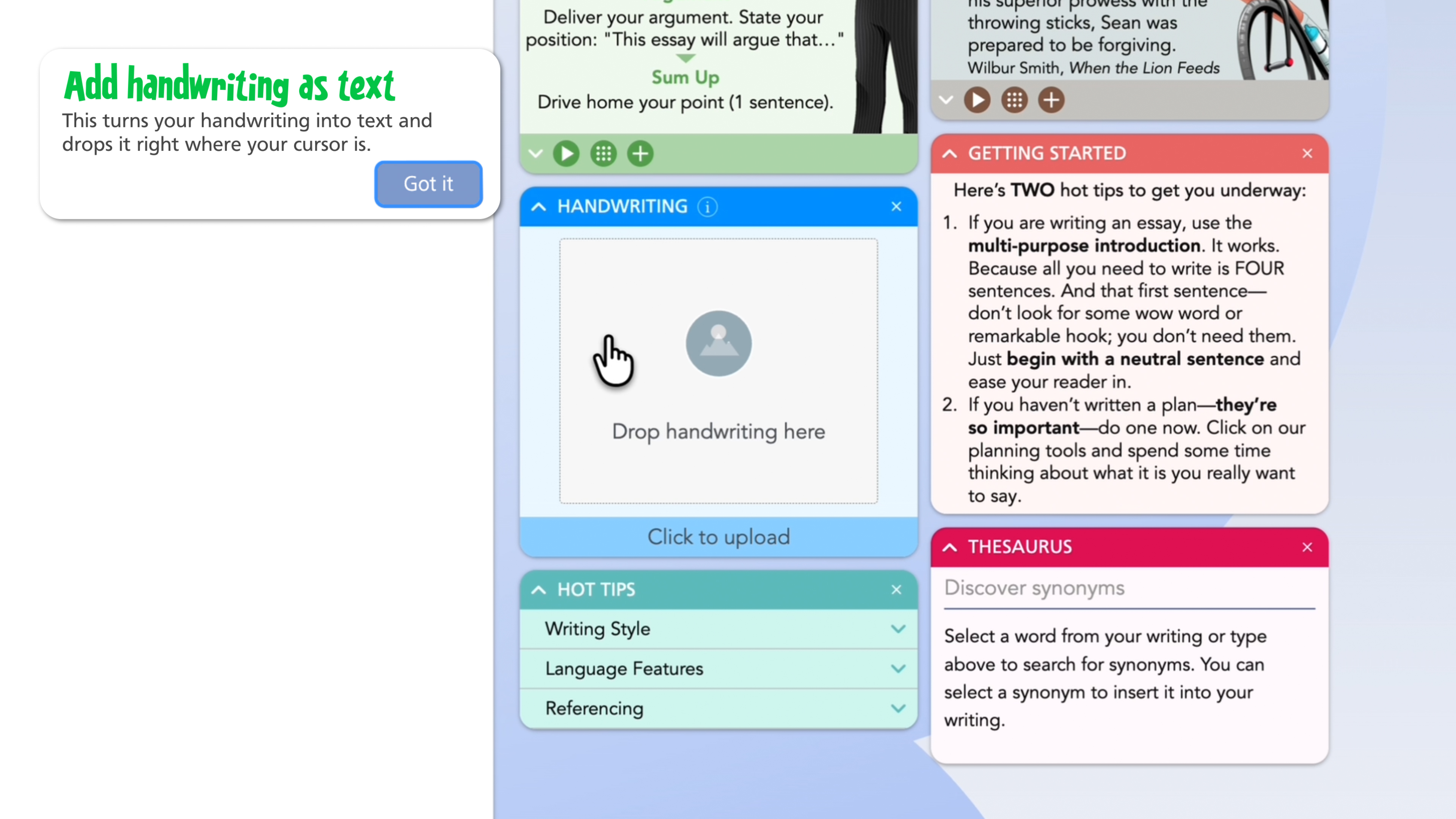
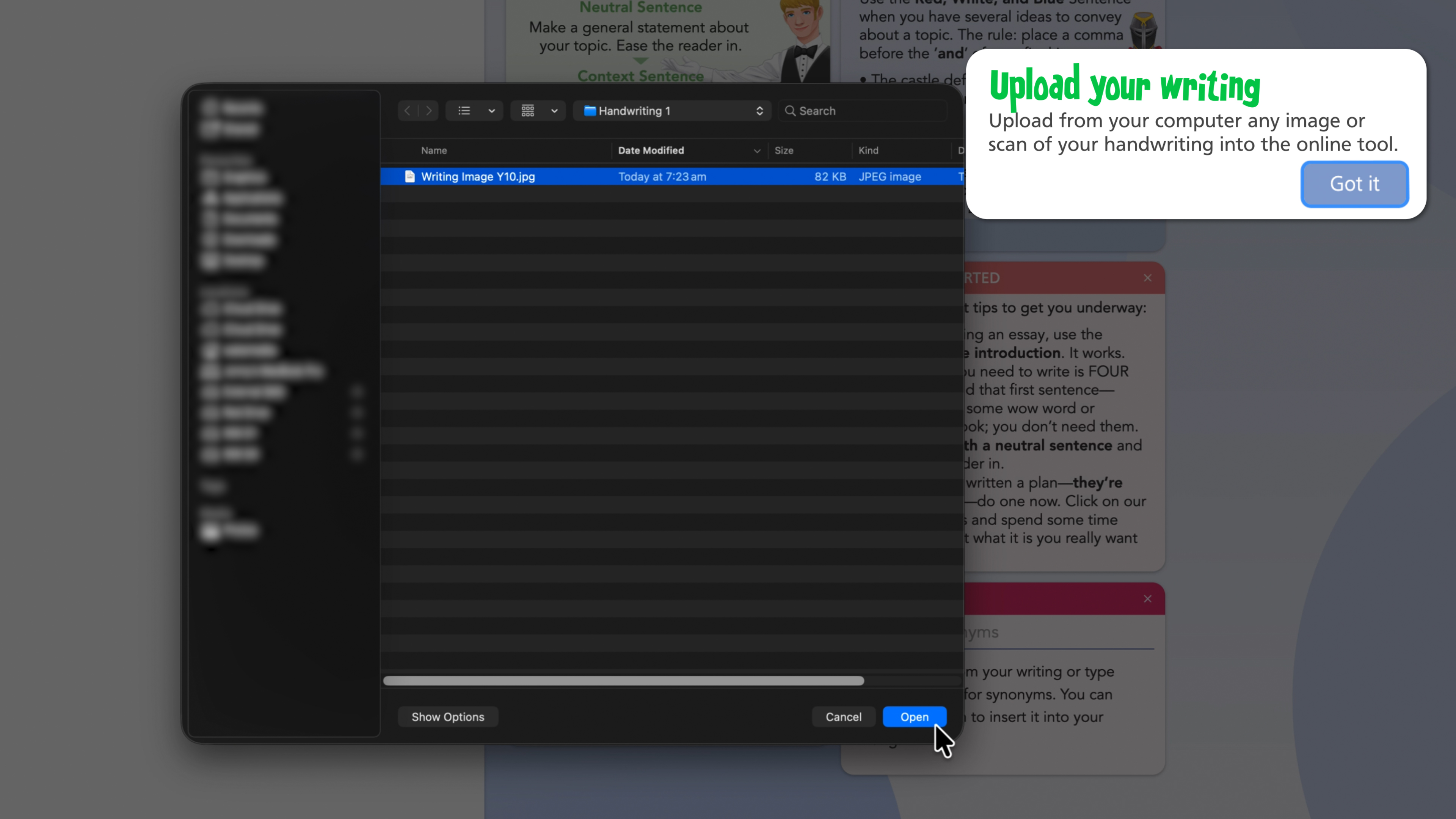
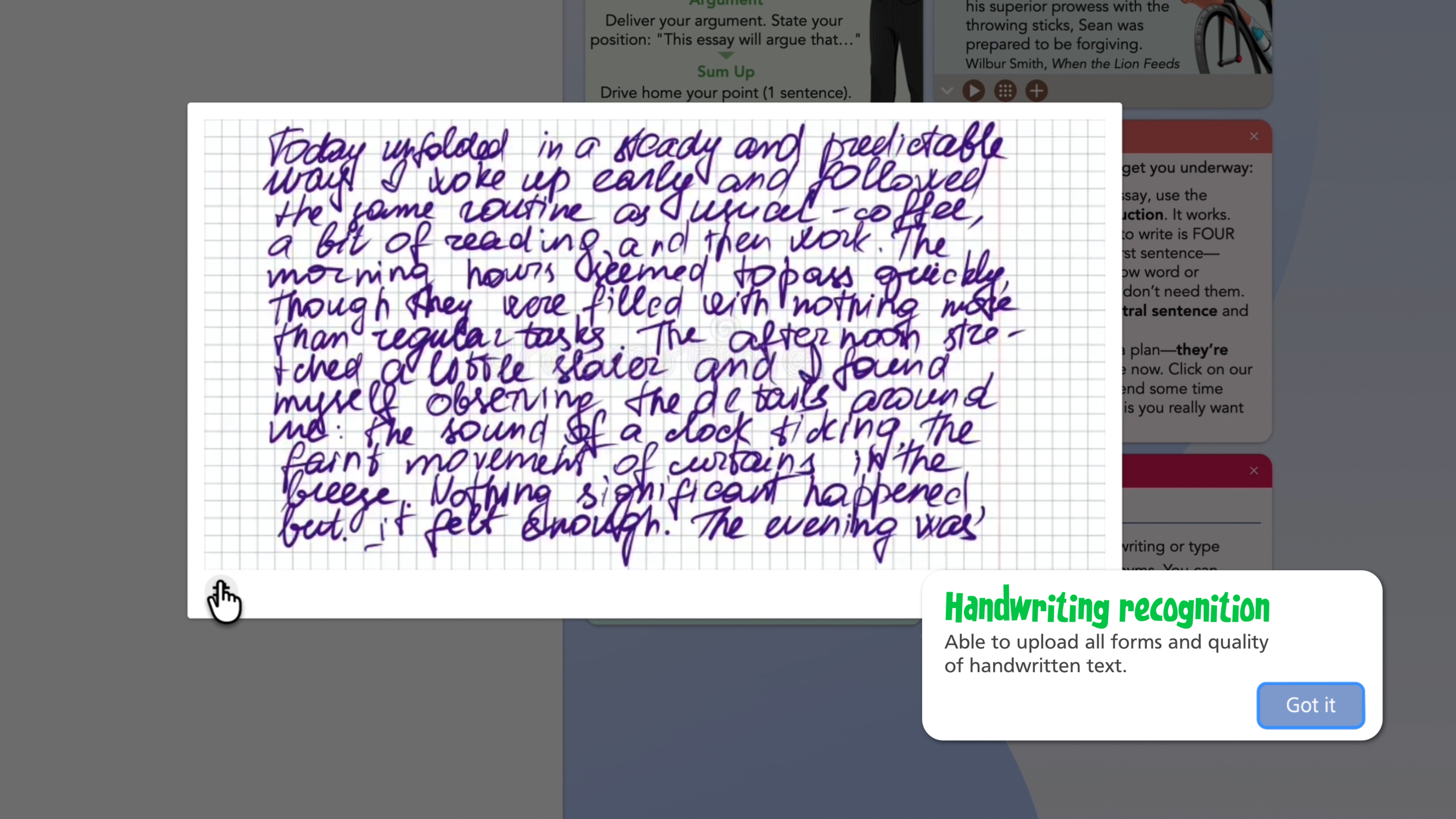
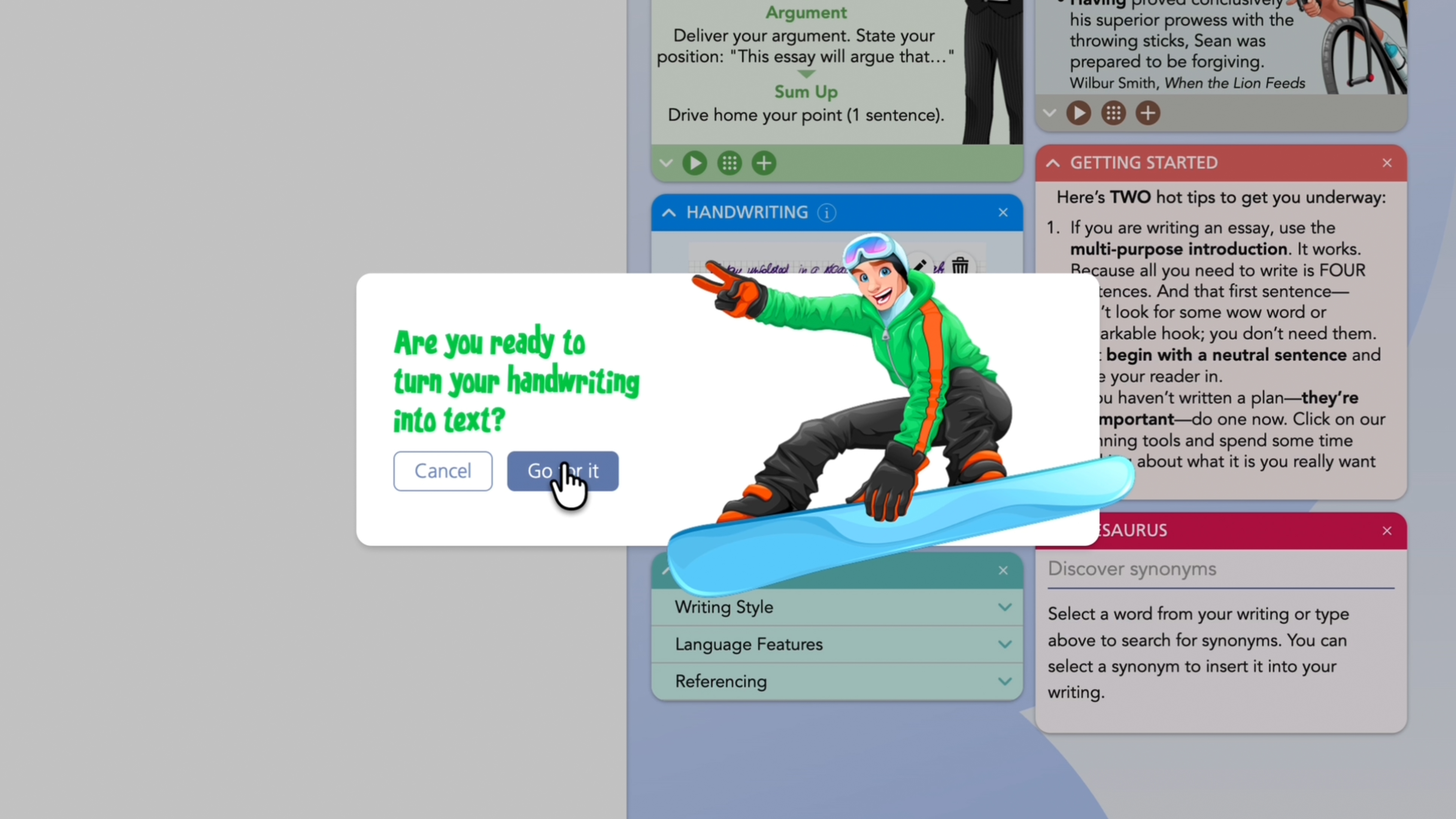
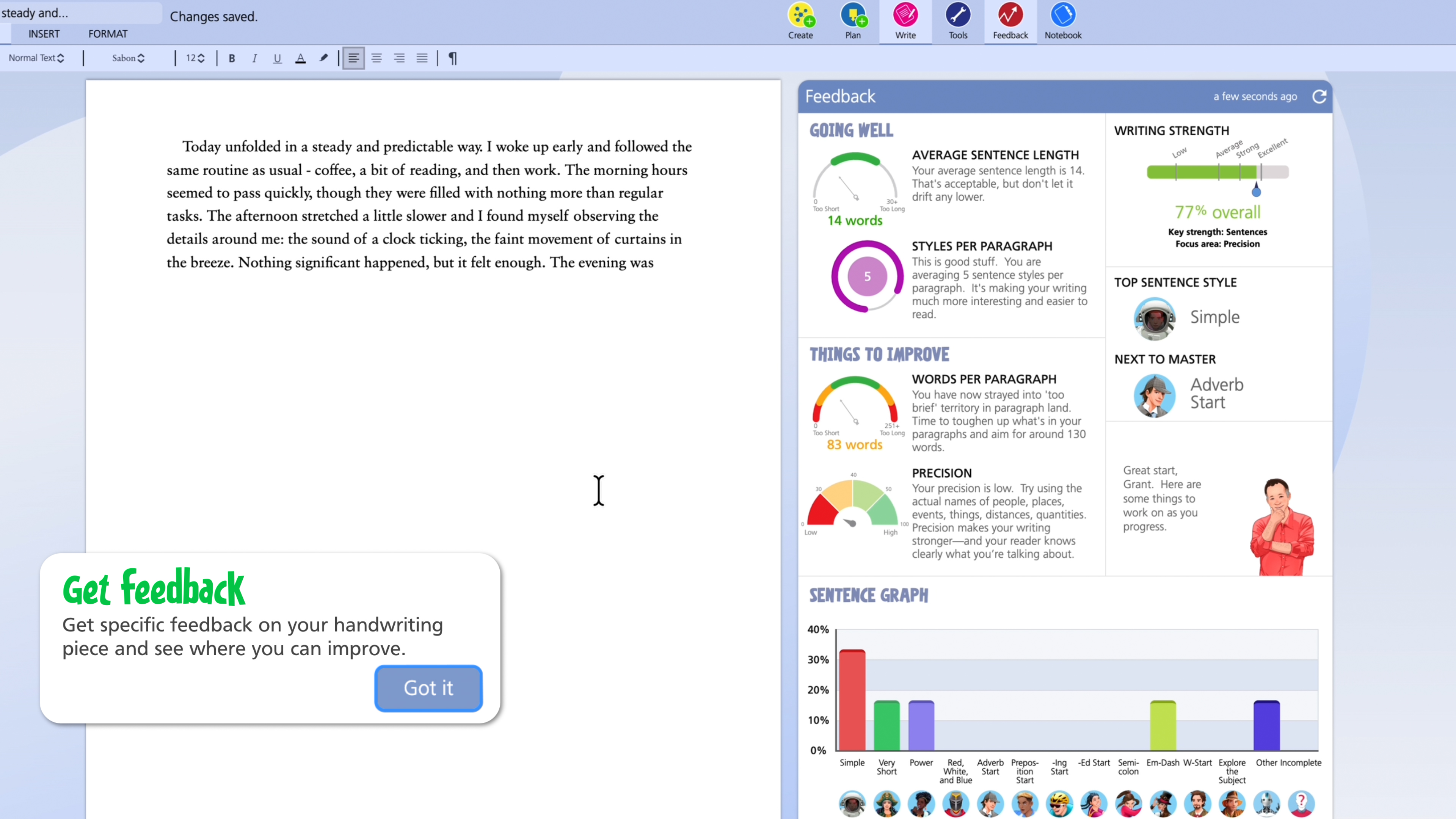
Students can now upload a photo of a handwritten draft directly into Writer's Toolbox. We convert it into typed text and run it through the same frameworks we use for typed submissions, so the feedback works exactly the way it always has.
“We built a way for students to write by hand and still get Writer's Toolbox feedback”
Why we built it this way
Schools have never had to choose between handwriting and digital tools. Most run both, often within the same lesson. What's been missing is a way to get one consistent, evidence-based feedback loop across both, instead of handwriting sitting outside the system altogether.
There's good research behind why that gap was worth closing. A 2025 review published in the journal Life found that handwriting draws on a wider range of brain regions than typing, spanning movement, sensory feedback and higher-level thinking. Researchers at CQUniversity have found something similar. Professor Ken Purnell, the university's Head of Educational Neuroscience, puts it simply:
"Typing records words. Handwriting builds understanding."
We didn't want that kind of learning to sit outside a student's Writer's Toolbox progress just because it happened on paper. Now it doesn't.
What it means for teachers
You can run a handwritten task in class and a typed one for homework, and both feed into the same Writer's Toolbox feedback loop. Nothing about your program needs to change to accommodate handwriting.
Students arrive at the marking pile having already fixed the errors Writer's Toolbox catches automatically, using the same evidence-backed frameworks we've always applied to typed work. That's true whether the draft started on a screen or on paper. Less time correcting the same issue across twenty-five students, more time in the 1:1 conversations that actually move a student's writing forward.
What it means for your students
Students get the same feedback, the same frameworks and the same progress tracking no matter how they write. Nothing is lost by picking up a pen instead of opening a laptop.
They still make the edits themselves. We don't hand them the answer. We show them what to fix and let them work it out, whether the draft in front of them started as ink or as text.
What it means for school leaders
Blended learning only works if the data holds together across every mode a student writes in. A handwritten draft, once uploaded, is processed the same way as typed work, so the writing data your school already tracks stays consistent no matter which one a student used.
It also settles a question that comes up more often every year: whether a piece of writing is a student's own. A handwritten draft, photographed and submitted by the student themselves, answers that on its own.
"One writing programme. One feedback loop. It doesn't matter which mode a student wrote in."
How it works, and what you need to know
Setting this up is simple for students: photograph the draft, upload it, get feedback. Behind that simplicity is a conversion engine trained on millions of data points, designed to handle real student handwriting rather than clean, evenly spaced print.
For compliance reasons, school admins need to opt in before this feature becomes available to their students. We'll walk you through what that involves before it goes live for your school.
The point of all this
This was never about handwriting replacing typing, or typing replacing handwriting. It's about one programme that works intuitively with both, so schools can run genuinely blended writing instruction without splitting their feedback, their data or their standards across two separate systems.
Sources
-
Marano, G. et al. "The Neuroscience Behind Writing: Handwriting vs. Typing—Who Wins the Battle?" Life, 22 February 2025. https://doi.org/10.3390/life15030345
-
Roberts, P. "Writing the right way: Early handwriting skills can boost creativity and learning." CQUniversity News, 9 October 2025. https://www.cqu.edu.au/news/1246971/writing-the-right-way-early-handwriting-skills-can-boost-creativity-and-learning
395A Manukau Road, Epsom, Auckland 1023, New Zealand